The Fellowship of the Ring: The Yes That Makes a Man Come Alive
By Tyler Woodley
The Fellowship of the Ring makes me think of something I heard from Delano Squires: a principle he calls the "law of dissipating responsibility." He models it on the conservation of energy in physics—that responsibility, once created, can never be destroyed. It can only be transferred. And every time it's transferred from the person who should be carrying it to someone else, the level of investment, care, and concern diminishes. The responsibility doesn't vanish. It just gets weaker hands. As a husband and father, that principle haunts me in the best possible way.
This "law" is everywhere once you see it. In politics, in culture, in the slow collapse of institutions that forgot who was supposed to be carrying what. But nowhere does it show up more clearly than in a scene Tolkien wrote seventy years ago.
At the Council of Elrond, the wise and the powerful gather, and every one of them knows the Ring must be destroyed. And they argue about who will do it. The whole Council teeters on the edge of doing exactly what Squires describes: transferring responsibility until no one is holding it at all.
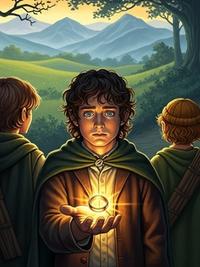
And then Frodo speaks. "I will take the Ring, though I do not know the way."
That sentence stops me every time. It's a fiat.
Catholics know that word, and Catholic Tolkien readers have noticed this parallel before. The Ring is destroyed on March 25th, the Feast of the Annunciation. The Fellowship departs Rivendell on December 25th.
Mary, confronted with a responsibility she did not seek and a cost she could not yet see, says yes. Fiat mihi secundum verbum tuum. Let it be done to me according to your word. She says yes to something enormous from a posture of smallness. Her yes didn't remove the cross; it aligned her with the One who would carry it.
Frodo's moment at the Council is the same shape. He is the least qualified person in the room, a hobbit from the Shire who likes gardens. And to me the detail that matters most is that Frodo was already the Ring-bearer before he ever stood up. He'd been carrying it since Bag End. The Council didn't assign him a new mission. It asked him to accept publicly what Providence had already laid on him. That is the structure of every vocation I've ever said yes to.
The day I got married, I stood at that altar and made promises I did not fully understand. I promised to love my wife in sickness and in health, for richer or for poorer, till death do us part. I meant every word. But I did not know the way. I didn't know what it would cost to keep those promises when I was exhausted, when we disagreed about something that mattered, when the weight of providing for a family pressed down on me and I wanted to hand it to someone else. I didn't know that loving her well would require me to die to myself in a hundred small ways every single week, and that some of those deaths would feel like actual deaths: of my preferences, my comfort, my version of how things should go.
What I also didn't know, and couldn't have, is that the dying is where the life is. Every time I've laid something down for her or for my kids, I've gotten back more than I gave up. That's the strange math of vocation: responsibility is the thing that makes a man come alive. My wife and my children are gifts. Caring for them is the privilege, and it has never once been a burden.
I said yes anyway. That was my fiat, and like Frodo's, it was spoken from a place of not knowing the way. Fatherhood doubled it, and doubled the joy along with it. When my first child was born, a responsibility was created that had never existed before in the history of the world. That specific child, with that specific soul, needed a father, and God had decided it would be me. I hadn't figured out how to be a good husband yet, let alone a good father. But that's how God works. He calls you and qualifies you on the road, which is exactly what happens to Frodo.
And here is where the law of dissipating responsibility cuts deep. That responsibility—the formation of my children's souls, the protection of my wife's heart, the spiritual leadership of my home—cannot be destroyed. It exists. It was created the moment those vocations were given to me. If I don't carry it, it doesn't disappear. It transfers. It falls on my wife, who was never meant to carry it alone. It falls to my kids, who have to raise themselves in the places where I've checked out. It falls to the culture, which is more than happy to form my children if I won't. And with every transfer, the investment, care, and concern diminishes. The thing that was supposed to be carried by a father gets carried by a substitute, and substitutes, however well-meaning, are not the ones who were called. That's why the yes matters so much. When the right man carries it, everything he was made for comes to life.
The Church teaches that a vocation is not primarily something you choose; it's something you receive. God gives it. Your yes activates it, but the call precedes the response. That means the grace to carry it is already moving toward you before you even open your mouth. Frodo didn't know the way. But the way existed. The path through Moria, through Lothlórien, through the breaking of the Fellowship and the long road to Mordor. It was all there, waiting to be walked, before Frodo ever stood up and volunteered.
I said yes without knowing the way, and the way has unfolded under my feet one step at a time. Not always the way I would have chosen. Not always painlessly. But faithfully, consistently, with a providence I can see more clearly in hindsight than I ever could in the moment. There have been conversations with my wife that I didn't know how to have until I was in the middle of having them, and the right words came, not from me, but through me. There have been moments with my kids where I had nothing left, no patience, no wisdom, no plan, and something steadied me anyway. The grace was already on the road before I set foot on it. I just had to keep walking.
That's what a fiat does. It doesn't guarantee understanding. It doesn't eliminate suffering. It opens a road that was closed, and it gives you the grace to walk it. I don't fully understand what my yes is asking of me yet. But the yes itself is what matters, and it has to be renewed every single day.
And some days I don't renew it well. Some days I'm closer to Boromir than Frodo, wanting the mission to serve me rather than the other way around. It's not that Boromir is a villain. He's a good man who wants to do the right thing, but on his own terms — and that's almost worse, because it feels close enough to virtue without hitting the mark.
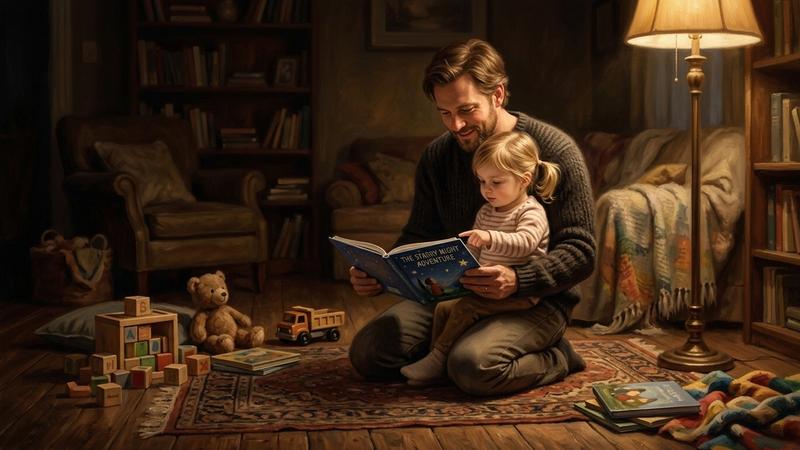
But then there's a moment — my kid asks me to read to them when I want to sit down, or my wife needs to talk about something hard when I'd rather be done for the day — and I recognize it. The Ring is on the table. The silence is here. This is the Council again, scaled down to the size of a living room, and no less real for being small.
But the beauty of the fiat is that it can be spoken again.
Every morning is another Council of Elrond. The responsibility is still on the table. The silence is still there. And I can stand up, again, and say: I will take it, though I do not know the way.
Tolkien knew this. The structure of grace operating through the smallest and least likely person in the room. The call that comes not to the powerful but to the willing.
Marriage and fatherhood make a fellowship: the quiet kind that holds a household together. No one writes songs about the Tuesday night you stayed up with a sick child, or the hard conversation where you cared more about her than about being right. But God sees it, and your family lives in it. That's the quest. That's the road to Mordor. It runs through your kitchen and your bedroom and the carpool line, and it requires the same thing Frodo's road required: someone who said yes and keeps saying it.
The responsibility is real. The call is real. The grace to carry it is already on the way.
I will take it, though I do not know the way.
Your feedback helps us create better content